
Buying or Renting a Home
This template compares the financial impact of buying versus renting a house, and the outcome in terms of end-of-period value.
⬇ Download the template (Excel)The variables you input
- Expected appreciation in value of the house
- Total cost of purchase of the house
- Closing costs — registration, stamp duty, brokerage
- Down payment
- Home loan interest rate
- Tenure of home loan (in years)
- Initial rent (as a percentage of the value of the house)
- Rent appreciation
- Gear of investment (this sets the asset allocation and expected returns)
Once you set these parameters, the template calculates the cash flows month to month and compares the final net value of your portfolio at the end of the loan period. It assumes you invest the down payment plus the difference between EMI and rent into your investment portfolio.

Additional resources
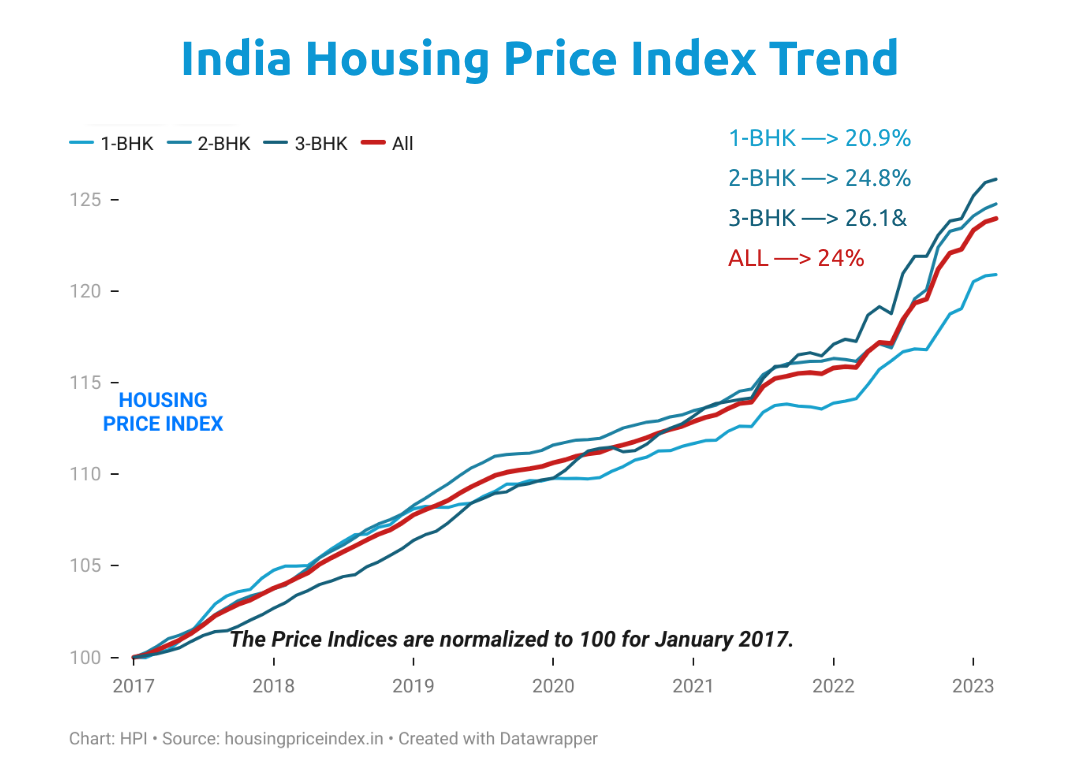
The Buying vs Renting template works best with context on housing-price trends. Despite real estate's large share of India's GDP, reliable residential data is limited. Two dependable sources are the Housing Price Index and the NHB Residex.
Housing Price Index
This index tracks residential price trends across 13 Indian cities, and separately across the top 8 — Ahmedabad, Bangalore, Chennai, Hyderabad, Kolkata, Mumbai, Pune and Delhi NCR. As most homes are 1-BHK, 2-BHK and 3-BHK, the index tracks these three property types. Housing.com has collected this data since 1 January 2017.
We've also written two related blogs on real estate and buying vs renting: